

Robotic Joint Replacement
Ethical, Compassionate and comprehensive Orthopaedic care
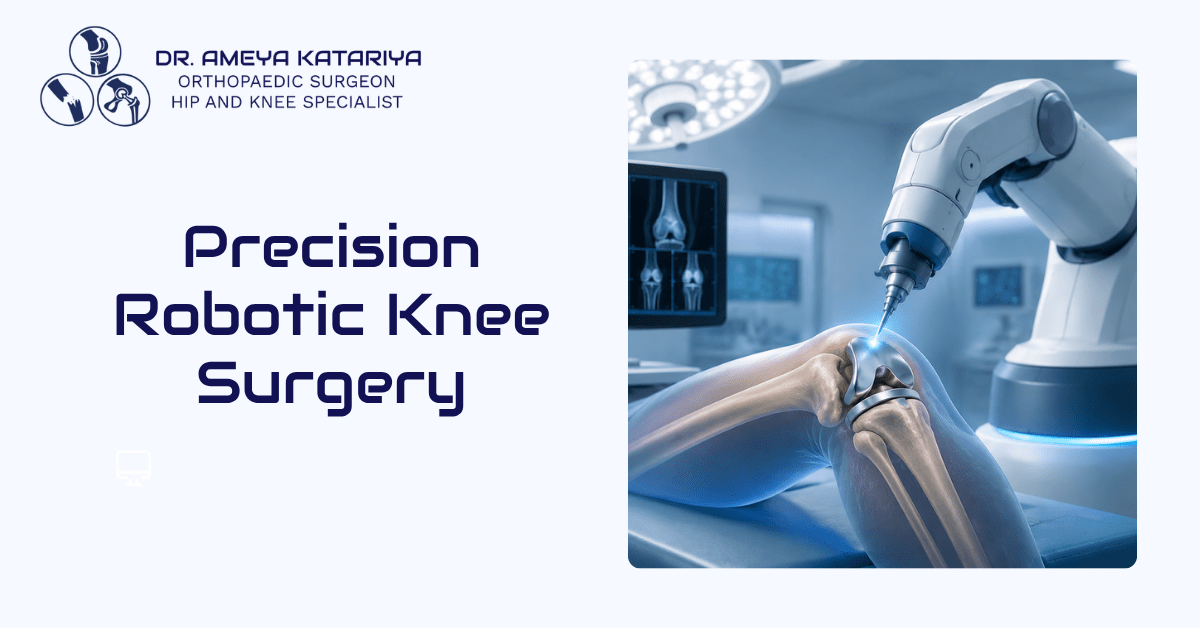
Robotic joint replacement surgery has rapidly gained popularity in orthopaedics due to its promise of enhanced precision and faster recovery. However, many patients wonder: Is robotic joint replacement truly safe? In this blog, we take a deep dive into the technology, explore safety aspects, and explain why robotic-assisted surgeries are becoming a trusted choice for hip and knee replacements in 2026.
Robotic joint replacement involves the use of robotic systems that assist surgeons in performing hip or knee replacement surgeries. These systems provide three-dimensional imaging, real-time feedback, and preoperative surgical planning. The robot acts as a guide for the surgeon, allowing precise alignment and positioning of implants while minimizing human error.
Unlike fully automated procedures, the surgeon remains in control, and the robot enhances the surgeon’s skill by improving accuracy and reducing variability in implant placement.
Robotic systems do not operate independently. Surgeons guide the robot and make all critical decisions, ensuring that human oversight remains central to the procedure.
Before surgery, detailed 3D scans of the joint are created. These scans allow surgeons to plan implant placement and bone cuts with high precision, minimizing the risk of errors during surgery.
During surgery, robotic systems provide continuous feedback, alerting the surgeon to deviations from the planned path and helping to maintain optimal alignment of implants.
Robotic-assisted surgeries often use smaller incisions and preserve surrounding tissue. This reduces trauma, lowers the risk of infection, and promotes faster healing.
Misaligned implants are a leading cause of joint replacement complications. Robotics ensures precise positioning, reducing the likelihood of dislocation, uneven wear, or premature implant failure.
Modern robotic systems undergo rigorous testing and maintenance protocols, making mechanical failure extremely rare.
The imaging required for planning is minimal, and safety protocols ensure that exposure is kept low.
Surgeons are thoroughly trained in robotic procedures, and most hospitals implement extensive certification programs before allowing surgeons to operate independently.
Precision and minimal invasiveness translate to reduced tissue trauma, less postoperative pain, and quicker rehabilitation.
Accurate placement ensures even load distribution, which can extend the lifespan of the joint prosthesis.
Every joint is unique. Robotic systems allow customization for each patient, ensuring better fit and function.
Robotic joint replacement surgery is safe, effective, and backed by advanced technology that enhances surgical precision while reducing risks. With trained surgeons, preoperative planning, and real-time robotic guidance, patients can expect faster recovery, fewer complications, and longer-lasting results. If you are considering hip or knee replacement, robotic-assisted surgery offers a reliable and innovative solution for improved outcomes.
Robotic Joint Replacement
Ethical, Compassionate and comprehensive Orthopaedic care