

Robotic Joint Replacement
Ethical, Compassionate and comprehensive Orthopaedic care
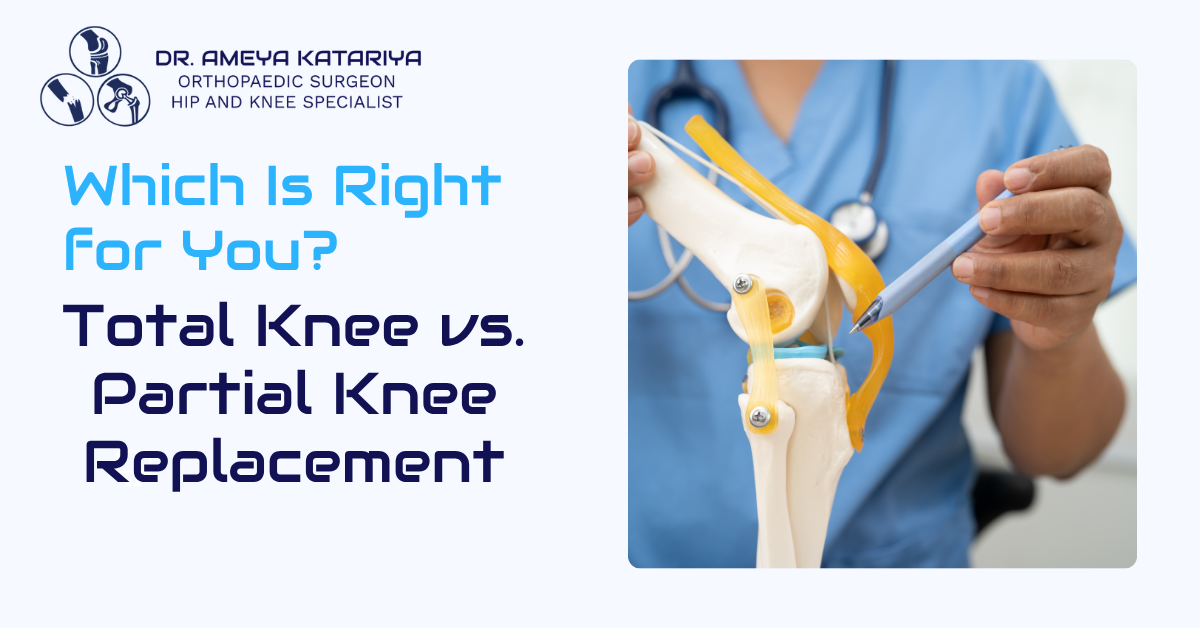
Knee pain, whether due to osteoarthritis, injury, or other conditions, can significantly impact your quality of life. When conservative treatments like medication and physical therapy no longer provide relief, knee replacement surgery becomes a viable option. There are two primary types of knee replacement surgery: total knee replacement (TKR) and partial knee replacement (PKR). This blog will help you understand the differences between the two, highlighting which option may be right for you.
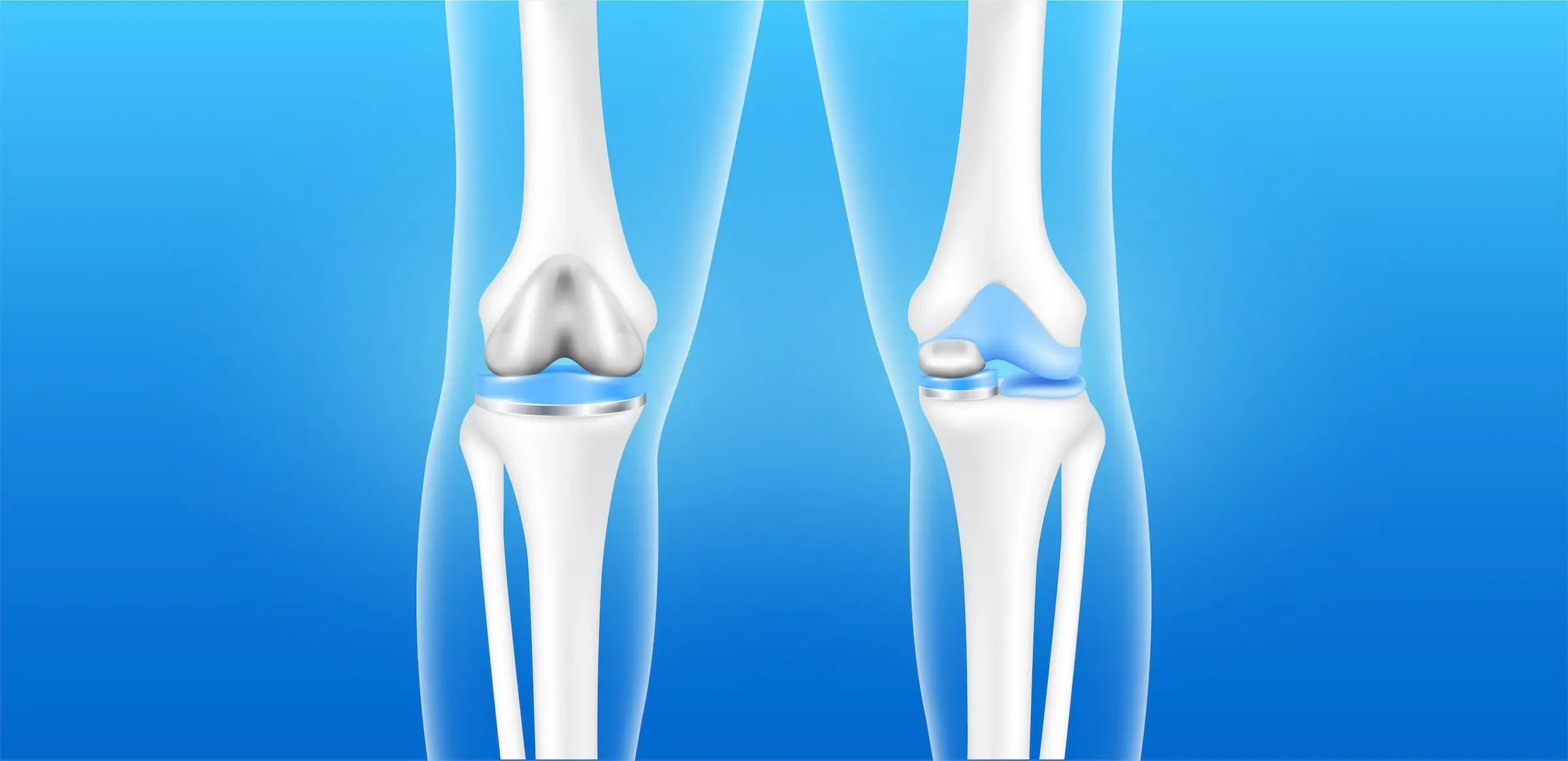
Total Knee Replacement (TKR) surgery involves replacing the entire knee joint. In this procedure, the damaged cartilage and bone are removed and replaced with artificial components. The prosthesis is designed to mimic the natural movement of the knee, providing pain relief and improved functionality.
TKR is an excellent choice when the entire knee joint is affected by arthritis or other degenerative conditions.
TKR offers a longer lifespan for the knee prosthesis, with many lasting 15–20 years or more.
TKR restores full range of motion and joint stability, helping patients regain their mobility and independence.
Partial Knee Replacement (PKR) involves replacing only the damaged part of the knee joint. This surgery is ideal for patients with isolated damage in one of the three compartments of the knee: medial (inner side), lateral (outer side), or patellofemoral (under the kneecap). Unlike TKR, PKR preserves the healthy parts of the knee joint.
Since PKR is less invasive, patients tend to recover faster compared to TKR.
PKR involves smaller incisions and less tissue disruption, resulting in reduced pain and swelling post-surgery.
By only replacing the damaged part, PKR preserves more of the natural knee structure.
| Feature | Total Knee Replacement (TKR) | Partial Knee Replacement (PKR) |
|---|---|---|
| Scope of Surgery | Complete knee joint replacement | Only the damaged compartment is replaced |
| Incision Size | Larger incision, more tissue disruption | Smaller incision, less tissue disruption |
| Recovery Time | 3 to 6 months | 4 to 6 weeks |
| Pain and Swelling | More pain and swelling initially | Less pain and swelling post-surgery |
| Longevity of Results | Longer-lasting, up to 20 years or more | Generally shorter, 10–15 years |
| Ideal Candidate | Severe arthritis or total joint failure | Localized arthritis or knee damage |
Choosing between Total Knee Replacement and Partial Knee Replacement depends on various factors, including the extent of knee damage, age, activity level, and overall health. Here’s how to decide:
Both Total Knee Replacement (TKR) and Partial Knee Replacement (PKR) are excellent surgical options to relieve knee pain and restore functionality. Your surgeon will assess your knee’s condition and recommend the best approach for your unique needs. Whether opting for a complete knee replacement or a partial one, modern knee replacement techniques provide effective solutions for pain relief and improved mobility.
Robotic Joint Replacement
Ethical, Compassionate and comprehensive Orthopaedic care