

Robotic Joint Replacement
Ethical, Compassionate and comprehensive Orthopaedic care
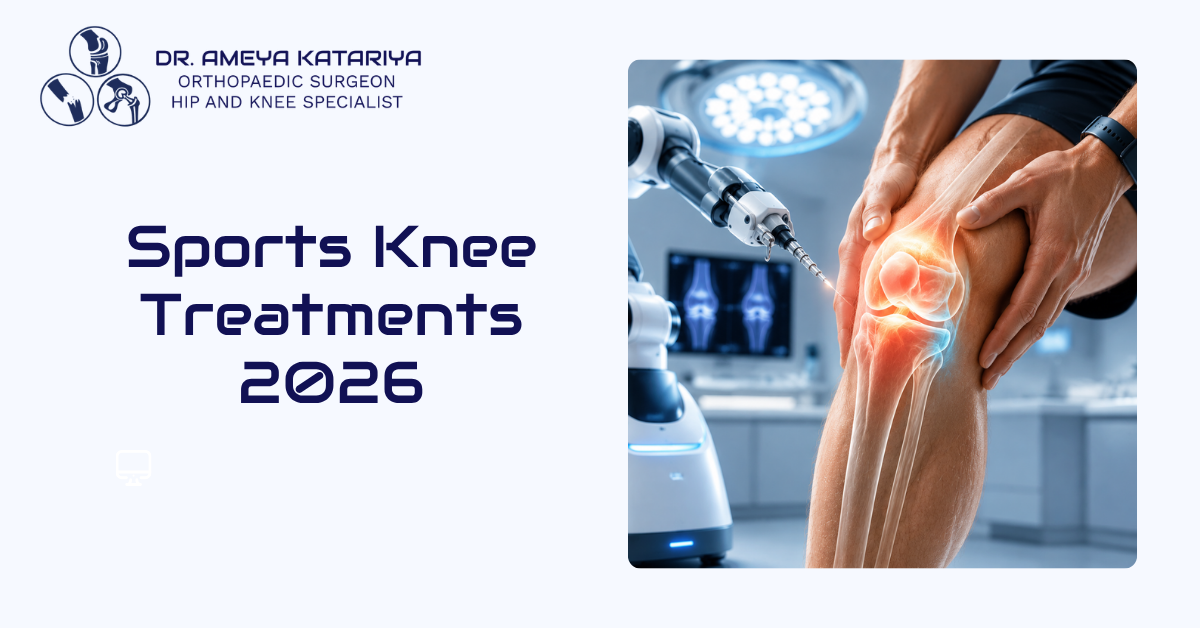
Knee injuries are among the most common sports-related injuries, affecting athletes of all ages and skill levels. Whether it’s a torn ligament, cartilage damage, or a complex fracture, timely and effective treatment is essential to restore mobility, prevent long-term complications, and allow athletes to return to their sport safely. In 2026, knee reconstruction has seen significant advancements, offering better outcomes, faster recovery, and minimally invasive options for patients. This blog explores the latest treatment options for sports-related knee injuries, with insights from Dr. Ameya Katariya, a fellowship-trained hip and knee orthopaedic surgeon based in Pune, Maharashtra.
Sports injuries can impact various structures of the knee, including ligaments, cartilage, tendons, and bone. Common injuries include:
ACL injuries are common in sports involving sudden stops, jumps, or pivoting movements, such as football, basketball, and soccer. These injuries often require surgical reconstruction to restore stability.
The meniscus acts as a cushion between the thigh and shin bones. Tears can occur from twisting or direct impact and may require arthroscopic repair or partial removal.
Less common than ACL injuries, PCL injuries usually occur from a direct blow to the front of the knee. Surgery may be necessary in severe cases.
The kneecap can slip out of its normal position during sports activities. Depending on severity, treatment may include physical therapy or surgical realignment.
Direct trauma to the knee can result in fractures or cartilage injuries that may require reconstruction or replacement to restore joint function.
Advances in technology and surgical techniques have revolutionized knee reconstruction, making it safer, less invasive, and more effective. Some of the latest options include:
Robotic systems allow surgeons to perform precise bone cuts and implant placement during knee reconstruction. This approach ensures:
Arthroscopic techniques continue to evolve, allowing surgeons to repair ligaments, meniscus, and cartilage through small incisions. Benefits include:
For ligament injuries such as ACL or PCL tears, surgeons can use tissue from the patient (autograft) or donor tissue (allograft) for reconstruction. Modern techniques focus on anatomical reconstruction for natural knee stability.
Emerging treatments like platelet-rich plasma (PRP) injections, stem cell therapy, and cartilage scaffolds promote healing and regenerate damaged tissue. These therapies are particularly useful for athletes seeking to delay or avoid knee replacement surgery.
3D printing technology allows creation of patient-specific implants for complex knee injuries or revisions. This ensures perfect fit and improved functional outcomes.
Preparation is key to a successful recovery from knee reconstruction. Dr. Ameya Katariya recommends:
Blood tests, imaging, and preoperative assessments to ensure you are fit for surgery.
Strengthening exercises for surrounding muscles can improve recovery and reduce complications.
Maintaining a healthy weight and avoiding smoking or alcohol can enhance healing.
Patients should discuss the surgery plan, risks, and recovery timeline with their surgeon to set realistic expectations.
Recovery from knee reconstruction depends on the type and severity of the injury, as well as the surgical technique used. Key aspects of rehabilitation include:
Robotic-assisted and minimally invasive procedures often shorten hospital stays and allow for faster, more efficient rehabilitation.
With the latest techniques in 2026, knee reconstruction offers:
Dr. Ameya Katariya emphasizes that individualized care, combined with modern technology, is crucial for optimal results.
Sports injuries can be debilitating, but advances in knee reconstruction in 2026 have made it possible to restore mobility, reduce pain, and return to an active lifestyle. From robotic-assisted surgeries to minimally invasive arthroscopy, custom implants, and regenerative therapies, athletes now have more options than ever for effective treatment. By preparing adequately, following your surgeon’s guidance, and committing to rehabilitation, you can achieve the best outcomes from knee reconstruction surgery.
Robotic Joint Replacement
Ethical, Compassionate and comprehensive Orthopaedic care